The field night vision and observation market covers areas such as professional outdoor activities, wildlife observation, search and rescue operations, forest fire monitoring, and personal security. The core driving force of this market is the pursuit of ultimate nighttime environmental perception capabilities, long-range target detection, and reliability in harsh environments.
- Market Size Forecast: The global high-end outdoor, professional night vision and observation market is expected to reach several billion US dollars by 2030, with thermal imaging handheld devices and AI-assisted recognition being the fastest growing product categories.
- The strategic importance of Ir thermal imaging: High-order Ir thermal imaging (VGA/SXGA or higher) has become a must-have for detection in completely dark environments, searching for hidden targets in dense vegetation, ensuring visibility in severe weather, and non-contact observation of wildlife.
- Core technology: Edge AI computing and specialized algorithms enable real-time automatic classification, behavior analysis, and early warning of targets such as animals, humans, and fire sources, greatly improving the safety of outdoor activities and the efficiency of professional observation.

I. Market Size and Growth Drivers of Outdoor Night Vision and Observation
The market growth is mainly driven by the increasing demand from professional users and high-end consumers for outdoor safety, target detection capabilities, and non-invasive observation technologies.
- Market size and growth trend
The market is driven by demand for high-end hunting, wilderness research, professional search and rescue organizations, and personal outdoor safety equipment.
- Growth drivers: The popularization of outdoor adventure activities, the deepening of professional scientific research on nocturnal animal behavior, and the need for early monitoring of forest fires and illegal activities.
- Structural changes: Products are shifting from simple image magnification (traditional night vision devices) to intelligent thermal imaging terminals with data processing, AI-assisted recognition, and recording functions.
- Breakthroughs in the application of Ir thermal imaging
The breakthrough value of thermal imaging technology lies in its accurate capture of thermal features and its adaptability to various environments:
- Advantages in complete darkness: Traditional low-light night vision devices are significantly less effective in extremely low light conditions (such as a new moon or under dense forest canopy). Thermal imaging, on the other hand, provides clear thermal images indistinguishable from those in daylight, enabling true perception in complete darkness.
- Penetrating obstructions: Dense foliage, bushes, or thick fog can block visible light, but the thermal signals emitted by the target (person or animal) can still be captured by thermal imaging. This greatly improves the success rate of search and rescue and animal observation.
- Non-invasive observation: Thermal imaging does not emit visible light, enabling non-invasive and undisturbed observation and behavioral research of wild animals.

II. 🔥 Rigid Application Needs of High-Order Ir Thermal Imaging and AI Algorithm Enhancement
The extreme resolution (SXGA) and thermal sensitivity (low NETD) of high-order Ir thermal imaging are strategic necessities for ensuring field safety and observation accuracy.
- Wilderness search and rescue and personal safety (core essential needs: rapid location and thermal signal differentiation)
- Essential needs: Rapidly locating missing persons or heat sources at night or in vast mountainous or forested areas. For personal safety purposes, remote detection of potential threats (people or animals) is required.
- Advantages of Ir SXGA or higher: The ultra-high resolution of Ir SXGA ensures that the shape and details of human thermal signals can be clearly distinguished during remote observation, rather than just a blurry hot spot. Extremely low NETD enables the capture of faint body temperature signals from hypothermic individuals.
- Wildlife observation and research (core requirement: remote, precise identification and behavior tracking)
- Essential need: Zoologists need to identify the species, number, and health status of animals from a distance (avoiding interference) and record their nocturnal behavior.
- AI algorithm enhancement: Thermal imaging combined with edge AI can classify detected heat sources locally in real time as humans, deer, bears, or other small animals. AI can even analyze an animal's mood and health status through thermal image features (e.g., inflamed or injured areas will generate abnormal heat), enabling non-contact health monitoring.
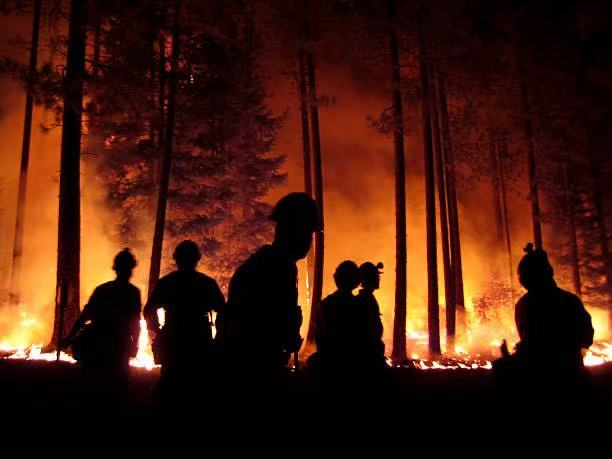
- Forest fire prevention and monitoring (core essential needs: early fire source detection and hotspot location)
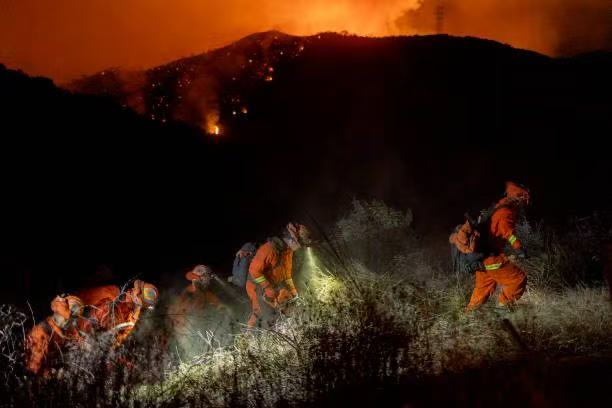
- Key need: In vast forest areas, early detection of small, hidden potential fire sources is crucial to preventing the spread of forest fires.
- Why it's necessary: Only thermal imaging can detect subtle thermal anomalies (such as embers or underground burning). AI algorithms are used to track the temperature profiles and geographic locations of these hotspots in real time, providing accurate early fire warnings that are more efficient and accurate than traditional patrols.
III. The Market Strategic Value of Edge AI Computing and Algorithms
In the field, the efficiency, autonomy, and immediacy of data processing are the core values of AI.
- The strategic role of edge AI computing
- Real-time target classification and tracking: Edge AI processes thermal image streams in real time on handheld viewing devices, quickly identifying and locking onto targets (people/animals/fire sources). This allows users to focus on observation without manually identifying and recording targets.
- Environmental parameter optimization: Edge AI can automatically correct thermal imaging measurement data based on environmental parameters such as temperature and humidity, ensuring the accuracy of thermal data under different altitudes and climate conditions.
- Market value of dedicated algorithms
- Behavioral Analysis and Alerts: Algorithms can be trained to identify potentially dangerous behaviors, such as detecting loitering or abnormally moving humanoid heat sources in private or restricted areas, and triggering alarms for personal and asset security.
- Data logging and automation: AI can automatically add geotags and timestamps to detected specific species or events (such as the discovery of fire sources or the detection of rare species), automating the data collection and reporting process and greatly improving the work efficiency of professional users.
Conclusion: Technological barriers and market competitiveness
High-end Ir thermal imaging (VGA/SXGA or higher) has become an indispensable requirement for modern professional field activities, search and rescue operations, and environmental monitoring due to its highly reliable detection capabilities in extreme darkness and harsh environments. Combined with powerful edge AI computing and dedicated algorithms, field night vision equipment has evolved from passive observation tools into intelligent outdoor safety terminals capable of autonomous perception, intelligent identification, and real-time decision support. Mastering this technology is key to securing a competitive edge in the professional outdoor and environmental security markets.
