The non-contact vital sign measurement market encompasses high-value-added areas such as hospital clinical monitoring, remote health management, sports medicine recovery monitoring, chronic disease screening, and dermatopathology analysis. The core driving force of this market is the pursuit of non-invasive, high-precision, real-time, and large-scale screening capabilities.

- Market size forecast: The global non-contact vital signs monitoring and medical thermal imaging market is expected to reach several billion US dollars by 2030, with telemedicine and AI-assisted diagnosis being the main growth engines.
- The strategic importance of Ir thermal imaging: High-order Ir thermal imaging (VGA/SXGA or higher) has become a must-have due to its extremely high thermal sensitivity (low NETD) for early fever screening, non-contact heart/respiratory rate measurement, burn wound assessment, diabetic foot lesions and chronic inflammation monitoring.
- Core Technology: Edge AI computing and specialized algorithms can extract vital sign data (heartbeat, respiration) from minute fluctuations in skin temperature, and perform quantitative analysis and automatic grading of skin pathological phenomena such as wounds, inflammation, and cell aging, which is key to improving diagnostic reliability and efficiency.
I. Market Size and Growth Drivers of Vital Signs and Health Monitoring
The market growth is primarily driven by global demand for improved public health efficiency, early management of chronic diseases, and comfortable and convenient healthcare experiences.
- Market size and growth trend
The market is driven by demand from hospitals, elderly care facilities, telemedicine service providers, and personal health monitoring devices.
- Growth drivers: Global infectious disease prevention (such as large-scale fever screening), long-term care needs arising from an aging population, and the need for precise recovery monitoring in sports science.
- Structural changes: Products are shifting from traditional contact sensors to non-invasive, continuous monitoring solutions that combine AI data analytics.
- Breakthroughs in the application of Ir thermal imaging
The groundbreaking value of thermal imaging technology lies in its direct visualization of physiological functions and its non-contact nature:
- Non-contact vital sign measurement: Traditional methods require wearing devices. Advanced thermal imaging can capture minute temperature differences (in millidegrees) on the skin surface caused by blood perfusion and respiratory movements, and use AI algorithms to calculate key vital signs such as heart rate and respiratory rate, achieving unrestricted and continuous monitoring.
- Objective assessment of wounds and inflammation: Inflammation, infection, burns, and cellular aging are all accompanied by abnormalities in local metabolism and blood flow, manifested as changes in skin temperature. Thermal imaging provides functional images, enabling objective, quantitative, and painless assessment of wound healing status.
- Fever and group screening: Thermal imaging can quickly, remotely, and in large numbers measure the body surface temperature of people, and is used for initial fever screening in public places. It is an important tool in the public health defense line.
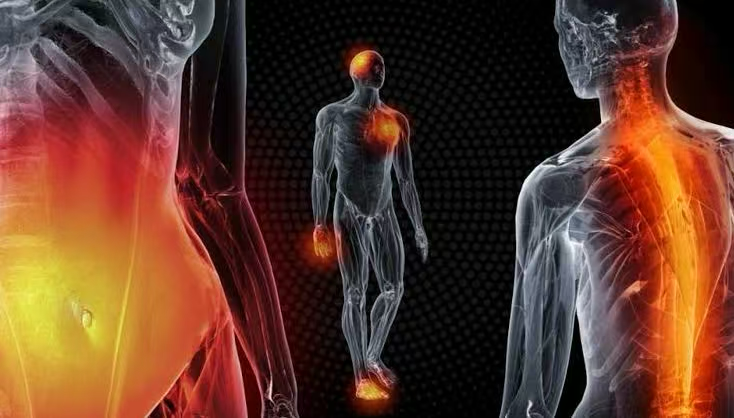
II. 🔥 Rigid Application Needs of High-Order Ir Thermal Imaging and AI Algorithm Enhancement
The extreme thermal sensitivity (low NETD) and high spatial resolution of high-order Ir thermal imaging are strategic necessities for achieving accurate physiological and pathological analysis.
- Quantitative assessment of wounds and skin lesions (essential core requirement: precise temperature difference and grading)
- Essential applications include: burn wound depth grading, early detection of diabetic foot ulcers, and assessment of chronic inflammation (such as arthritis). These all require accurate temperature data to determine blood perfusion and the degree of inflammation.
- Advantages of Ir SXGA or higher: Ir SXGA resolution ensures coverage of wound or lesion areas and accurate temperature measurement at every point. Extremely low NETD allows for the detection of minute temperature differences caused by tissue cell aging, microcirculatory abnormalities, and other factors.
- AI algorithm enhancement: The algorithm automatically segments the wound area into thermal images and calculates indicators such as temperature difference index, edge gradient, and thermal distribution asymmetry to achieve objective and digital assessment of burn grading, infection risk prediction, and healing speed.
- Non-contact heart rate and respiratory rate measurement (essential core function: weak thermal signal extraction)
- Essential need: In scenarios such as hospital ICUs, neonatal intensive care units, or fall prevention for the elderly at night, there is a need for continuous, unrestricted, and sleep-undisturbed vital sign monitoring.
- Why is it necessary? Only high-order thermal imaging (low NETD) can capture the minute, periodic thermal fluctuations around the skin or nostrils caused by blood pulsation and respiratory airflow. Edge AI algorithms use signal processing and deep learning models to extract accurate heart and respiratory rates from these thermal noises.
- Monitoring of sports medicine and cosmetic treatments (essential core: fatigue and efficacy heatmap)
- Essential needs: Early assessment of muscle fatigue, injury, or overtraining in athletes, and objective tracking of the speed and effectiveness of skin inflammation resolution after cosmetic procedures (such as laser and radiofrequency).
- AI Algorithm Enhancement: The algorithm combines heatmaps with human anatomy models to automatically label and analyze thermal asymmetry in specific muscle groups (such as the temperature difference between the fatigued and non-fatigued sides), providing quantitative guidance on training risk and recovery status.
III. The Market Strategic Value of Edge AI Computing and Algorithms
In the vital signs measurement market, the value of AI lies in transforming continuous thermophysical data into clinically meaningful medical indicators.
- The strategic role of edge AI computing
- Real-time signal processing: Edge AI is responsible for processing high-frame-rate thermal image streams locally, performing real-time denoising, signal filtering, and physiological parameter extraction. This ensures low latency and high reliability of data in clinical monitoring.
- Data Privacy and Decision Making: Medical data is subject to strict regulation. Edge AI performs all image analysis locally, only transmitting quantified physiological indicators to the cloud or recording them, complying with medical data privacy regulations such as HIPAA.
- Market value of dedicated algorithms
- Standardization of medical indicators: The algorithm can accurately correct the thermal emissivity of thermal images and automatically lock the ROI, ensuring that the measured temperature data are clinically comparable and standardized under different environments and distances.
- Diagnostic Assistance Systems (CAD): Combining deep learning algorithms, these systems can be trained to identify complex thermal patterns associated with specific pathologies (such as diabetic foot, malignant tumors, and severe inflammation), acting as a second opinion for doctors and improving the accuracy of large-scale early screening.
 Conclusion: Technological barriers and market competitiveness
High-order Ir thermal imaging (VGA/SXGA or higher) has become an indispensable necessity for vital sign measurement, wound assessment, and early screening of chronic diseases due to its unique advantages in non-contact, non-invasiveness, and extreme thermal sensitivity. Combined with powerful edge AI computing and specialized medical algorithms, thermal imaging systems are becoming intelligent health monitoring hubs capable of real-time and accurate analysis of physiological functions and pathological changes. Mastering this technology is a key competitive advantage in the future digital healthcare and remote care market.
 Conclusion: Technological barriers and market competitiveness
